
"reindeer removal"
22870 article(s) found
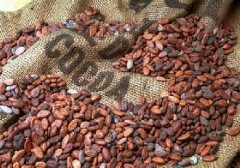
The magic of coffee is to remove the odor of the refrigerator
1. In addition to tea, lemon, orange peel, freshly ground coffee powder also has the same effect. After a day or two, not only will the fridge smell good, but it will also make you suddenly want coffee. 2. Caffeine is a key ingredient in almost all cellulite removal creams that are expensive. Legend has it that caffeine speeds up metabolism and reduces cellulite accumulation

How to remove coffee stains-how to wash coffee stains
How to remove coffee stains-how to wash coffee stains and absorb them dry. Next, wipe it with a sponge dipped in water. Then, pour a small amount of water-based detergent and a few drops of white vinegar on the stain. Cover the stain with a water-absorbing pad soaked with water-based detergent. Cover long enough to remove all stains. After the stain is absorbed by the water absorption pad, it should be replaced. Stains and cloth must always be soaked in water.

On the treatment of coffee beans after picking
When the fruit of the coffee tree is picked, the four layers of skin wrapped around the coffee beans need to be removed in order to finally get the coffee beans needed. The main methods to remove the outer epidermis of coffee beans are "wet treatment" and "dry treatment".

Coffee tanning treatment, washing, taste and flavor advantages processing process
Coffee sun treatment water washing taste flavor price process water washing is the most popular treatment method, most of the boutique coffee beans will choose water washing method. Washing coffee refining process: harvesting storage tank (removal of impurities and unripe beans) pulp removal machine (removal of pulp and impurities) fermentation tank (removal of mucous membrane attached to endocarp) washing pool (selection of light weight and hard beans

Is it necessary to use a special scale remover for coffee machine descaling?
Coffee machine scale removal must use a special scale remover [function]: maintain the coating on the surface of the heating tube to remove impurities and scale produced by the long-term use of the coffee machine. Increase and restore the elasticity of the O-ring for sealing, the maximum delay the service life of fragile aging parts. [advantages]: efficient, convenient and safe to use. It can remove the dirt attached to the inner wall of the coffee machine in a short time.

Classification and causes of defective beans in Fine Coffee SCAA
The growth environment of boutique coffee beans also has higher requirements. Generally grow at an altitude of 1500 meters or even more than 2000 meters above sea level, with appropriate precipitation, sunshine, temperature and soil conditions. Some world-famous coffee beans also have a special geographical environment, such as the alpine clouds in the Blue Mountains, the free shade provided by the afternoon clouds in Kona, and the volcanic ash soil in Antigua.

Do I have to go to the end of hand coffee? What happens if you keep the end of the hand-brewed coffee?
Sometimes when baristas are brewing coffee, some baristas will remove the filter cup after all the water in the filter cup has flowed away, while others will choose to remove the filter cup when there is still water in the filter cup. What effect will this have on the flavor of the coffee? The editor is a little curious! So let's do an experiment today to see if there is a difference between keeping the water in the tail and removing the water in the tail.

Do you need to remove the 15ml at the end of the hand-made coffee? Can I make coffee by hand without the end?
Once while making coffee, the guest on the side asked, "would you like the end of this coffee?" After some understanding, the so-called removal and retention of the tail refers to the removal of the filter cup (interception) when there is 15-20ml coffee liquid left in the filter cup at the last stage of brewing. The friends who use this method of removing the last paragraph all think that the end will have a bitter, astringent and miscellaneous taste.
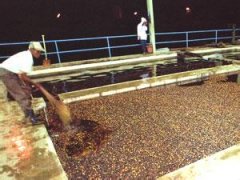
Introduction to the treatment of raw coffee beans-washing method
Coffee washing began in the mid-18th century. In the washing process, the pulp of the coffee fruit (red cherry) is first removed, then the residual mucous membrane on the inner pericarp is removed by a fermentation tank, and the beans are washed and dried. The difference between the non-washing method and the water washing method is that the non-washing method is to remove the pulp after drying, while the washing method is to remove the pulp before drying. Washing can pass every step.

Coffee flavor and raw bean treatment are different from water washing and wet planing red wine.
Coffee beans are the seeds of coffee fruit, which is also called coffee cherry. After removing the exocarp and pulp of the coffee fruit, you will get two coffee seeds, that is, coffee raw beans. Coffee fruit is easy to rot when ripe and picked, so it should be dealt with in time to facilitate storage and transportation. [washing treatment] removal of pulp pectin washing treatment, also known as water

The difference between the characteristics of Coffee Bean Solar and Water washing Coffee Water washing, Solar and Honey treatment steps
Professional coffee knowledge exchange more coffee bean information Please pay attention to the coffee workshop (Wechat official account cafe_style) Solar method is the oldest method of treatment. according to literature, the Arabs began to use the sun method to deal with coffee fruit as early as 1000 years ago in the 11th century. Because
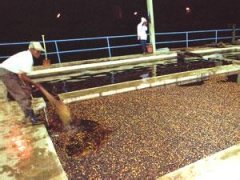
Introduction of water washing method for the treatment of raw coffee beans
Coffee washing began in the mid-18th century. In the washing process, the pulp of the coffee fruit (red cherry) is first removed, then the residual mucous membrane on the inner pericarp is removed by a fermentation tank, and the beans are washed and dried. The difference between the non-washing method and the water washing method is that the non-washing method is to remove the pulp after drying, while the washing method is to remove the pulp before drying. Washing can pass every step.
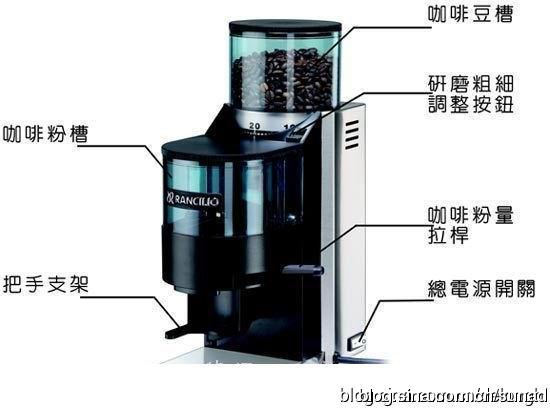
Introduction of Italian Lanchio brand bean grinder: how to clean up the Lanchio bean grinder
The "Rocky" bean grinder made by Rancilio factory in Italy has enjoyed high praise all over the world. It has the same heart (high efficiency motor) of MD-40 bean mill as the same factory, 50mm diameter grinding blade, and stable and durable quality. It is a high-grade household bean grinder with high praise. Preparation: Rocky bean grinder waiting to be cleaned, a brush, old teeth

A good way to clean coffee cups and remove coffee stains
As we all know, with the increase in the use of coffee cups, it is inevitable that some stubborn coffee stains will remain on white coffee cups. If they are not cleaned in time, they will leave stubborn coffee stains. Today, the editor is here to teach you how to clean coffee cups to remove coffee stains. In fact, there are many ways to remove coffee stains thoroughly, and there are all kinds of methods. The following editor introduces several ways to compare coffee stains.
Processing methods of high-quality coffee beans
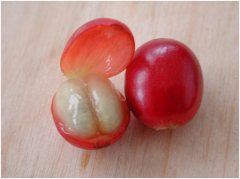
There are a pair of oval seeds in the center of the fruit of the coffee tree, which are covered with exocarp, endocarp and pulp. Ripe fruit will rot in a short period of time without treatment, so the purpose of refining is to enable coffee beans to be preserved for a long time, easy to store and circulate. Figure (1) Coffee fruit Coffee fresh fruit should be dealt with immediately after being harvested. Refining is to remove the peel and pulp of coffee fruit

Treatment of Coffee fruits Coffee bean treatment
I would like to introduce the treatment of coffee fruits and the comparison of different ways. The following picture shows an enlarged coffee bean with pectin, in which pectin, parchment, silver skin and raw beans are clearly distinguished. Classification of Processing Method Coffee Fruit treatment methods are divided into dry (Dry Processing) and wet (Wet Processing) treatments according to whether the peel is removed or not.

Introduction of water washing method for the treatment of high-quality coffee and raw beans
Coffee washing began in the mid-18th century. In the washing process, the pulp of the coffee fruit (red cherry) is first removed, then the residual mucous membrane on the inner pericarp is removed by a fermentation tank, and the beans are washed and dried. The difference between the non-washing method and the water washing method is that the non-washing method is to remove the pulp after drying, while the washing method is to remove the pulp before drying. Washing can pass every step.

Processing method of high-quality coffee beans coffee refining method
There are a pair of oval seeds in the center of the fruit of the coffee tree, which are covered with exocarp, endocarp and pulp. Ripe fruit will rot in a short period of time without treatment, so the purpose of refining is to enable coffee beans to be preserved for a long time, easy to store and circulate. Figure (1) Coffee fruit Coffee fresh fruit should be dealt with immediately after being harvested. Refining is to remove the peel and pulp of coffee fruit
Processing method of high-quality coffee beans coffee refining method
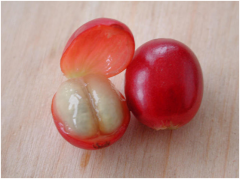
There are a pair of oval seeds in the center of the fruit of the coffee tree, which are covered with exocarp, endocarp and pulp. Ripe fruit will rot in a short period of time without treatment, so the purpose of refining is to enable coffee beans to be preserved for a long time, easy to store and circulate. Figure (1) Coffee fruit Coffee fresh fruit should be dealt with immediately after being harvested. Refining is to remove the peel and pulp of coffee fruit

Introduction to the drying method of Red Honey Wine with Honey treated Coffee beans
Honey-treated coffee beans are washed in the sun. Choose beans: if you put the harvested fruit in the water tank, the ripe fruit will sink, while the immature and overripe fruit will float up and can be removed. two。 Drying: place the selected ripe fruits in the square and expose them to the sun for 5 or 6 days until fully dried. At this time, the fruit turns dark brown and the moisture content drops to 13%. 3. Shelling: dry